
Entry Classifications
CatalogIt uses Classifications to organize collection items into clear, structured categories. Each Classification provides a distinct set of fields for documenting specific types of items. Choosing the correct Classification when creating an entry is one of the most important steps in building an accurate, searchable, consistent, and usable database.
This article explains:
- What Classifications are
- Why they matter
- How the hierarchy works
- How to choose the right one
- An example of Entry Classification
What is a Classification?
A Classification tells CatalogIt what kind of thing an item is, and provides the user with the proper structure for cataloging that item. It defines the object’s type and purpose. The Classification answers the basic question: “What is this object?”
For example:
- Is it a Book or a Photograph?
- Is it an Archive item or a Work of Art?
- Is it a Textile, Basket, Coin, or Painting?
Each CatalogIt entry must have a Classification; that choice determines:
- Which metadata fields appear
- How the item is grouped
- How users search and filter the collection
Why the Classification is Important
Using consistent Classifications helps:
- Keep similar items grouped together
- Make searching and filtering accurate
- Ensure the right metadata fields appear
- Improve reporting and exports
- Prevent duplicate or mismatched records
- Create long-term data consistency
If items are classified inconsistently (for example, mixing Photograph and Work on Paper for similar items), it becomes harder to find, compare, and manage them later.
How the Hierarchy Works
CatalogIt Classifications are organized in a parent–child hierarchy.
Most Classifications have a parent Classification above it. The parent defines the broader category, while the child defines the more specific type.
Example:
Collectible
└── Object/Artifact
└── Basket
└── Coiled Basket
This means:
- Collectible is the broadest category
- Object/Artifact narrows it
- Basket narrows it further
- Coiled Basket is very specific
When choosing a Classification, always go as specific as possible while staying accurate, as that will provide you with the most appropriate set of fields for documenting your item.
Classification vs. Description
Classification is not the same as description.
- Classification = what the object is
- Description = a narrative of the attributes of the specific item
Let's classify this image, for example:
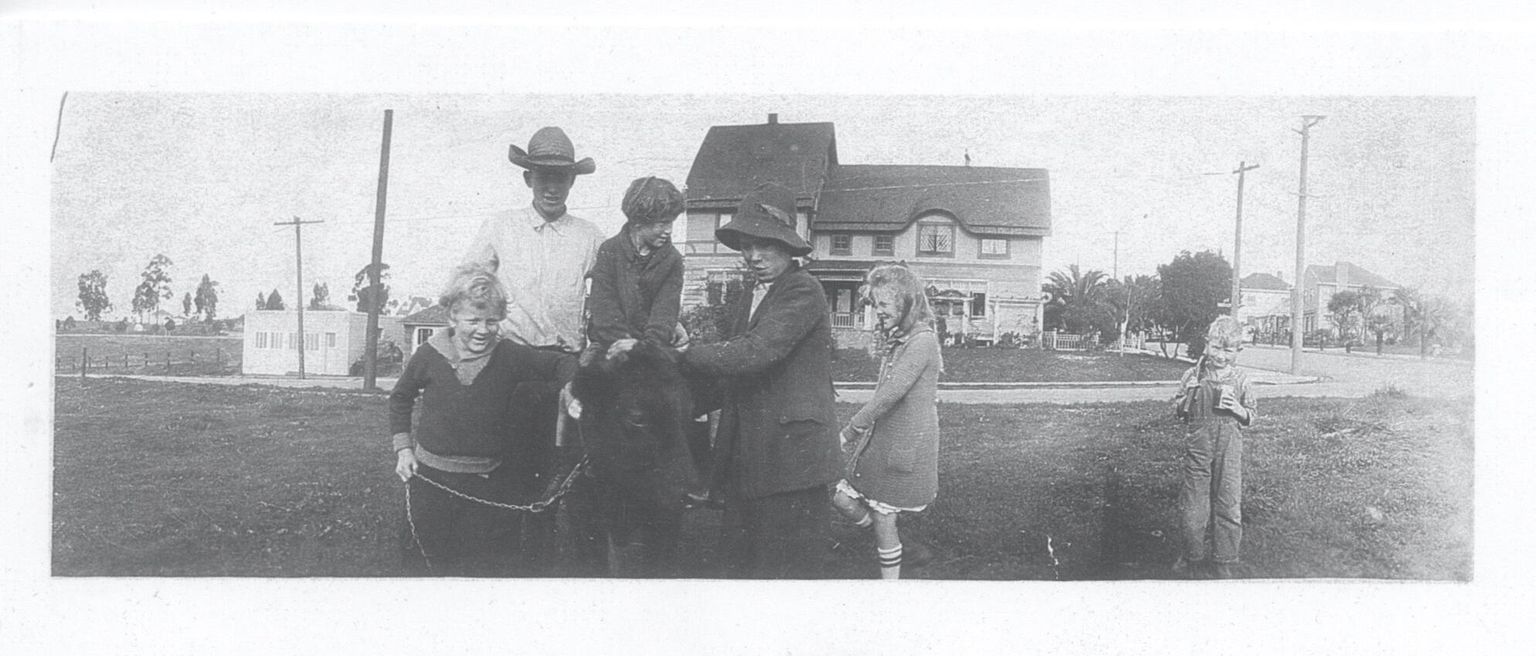
- Classification: Photograph
- Description: “Photo depicting several children, one of whom is sitting on a cow, standing in front of a home.”
Think of Classification as the container and description as the content inside it.
How to Choose the Right Classification
When creating a new entry, ask:
- What is the object’s primary form?
- What was it made to be?
- Is it functional, artistic, documentary, or published?
- Is there a more specific child Classification available?
Tip: Choose what it physically is, not what it depicts.
- Use Publication for published items, such as brochures, reports, magazines, broadsides, etc.
- Use Work on Paper only for artistic works on paper (drawings, prints, collages).
- Use Archive for letters, oral histories, and unpublished documentary records.
- If multiple options seem possible, choose the one based on function and format, not subject.
Example: Entry Classification
Let’s say you are cataloging a hand-written letter.
Correct choice:
Collectible
└── Archive
└── Letter
Not ideal choices would be:
- Publication (it isn’t published)
- Work on Paper (it isn’t primarily art)
- Object/Artifact (too broad when Archive fits better)
Using Entry Classifications in CatalogIt
When creating a new Entry:
- Click the orange + at the bottom right of the screen to Add Entry
- Select the appropriate Classification (you can toggle between ‘recommended’ Classifications- what you’ve used most recently and what you’ve used overall so far in your catalog- and ‘all’ Classifications at the top of your screen)
- Choose the most specific available option, then click ‘done’
- Once selected, CatalogIt will present the correct set of fields for that type of object.

Best Practices
- Be consistent across similar items
- Always use the most specific option available
- Classify by format, not subject
- Don’t mix artistic and documentary types
- When unsure, check how similar items are already classified
Consistency is more important than perfection. A well-used classification system keeps the collection usable for years to come.
The table below presents all of the Classifications currently available in CatalogIt.
| Classification | Description | Parent Classification |
| Archive | A single archival item or a body of historical records from a single source or created by a single entity | Collectible |
| Art | Item created primarily for aesthetic purpose | Collectible |
| Audio Recording | Physical record of produced audio consisting of instrumental music, song, spoken word, or a combination thereof that can then be played back, or reproduced | Collectible |
| Banknote | A type of negotiable promissory note, made by a bank or other licensed authority, payable to the bearer on demand. | Object/Artifact |
| Basket | Basket made for use, trade, or sale | Object/Artifact |
| Bark Basket | Item constructed primarily of stitched or folded bark | Object/Artifact |
| Book | A written or printed work consisting of pages glued or sewn together along one side and bound in covers | Publication |
| Botany | The study and classification of plants | Botany |
| Ceramic | Item made of clay and hardened through heat | Object/Artifact |
| Clothing/Dress/Costume | An item or a related assemblage of items meant to be worn | Object/Artifact |
| Coiled Basket | Item constructed with a continuous coil foundation bound together by stitching | Basket |
| Coin | A small, flat, piece of metal or other material used primarily as a medium of exchange or legal tender. | Object/Artifact |
| Collage | A piece of art made by sticking various different materials such as photographs and pieces of paper or fabric onto a backing | Work on Paper |
| Collectible | Any item suitable for collecting and sought be collectors | Collectible |
| Crocheted Textile | The fabric is formed by interlocking yarn or thread with a hook, typically one stitch at a time | Textile |
| Drawing | Art made with a pencil, pen, or crayon rather than paint, especially one drawn in monochrome | Work on Paper |
| Entity | A thing with distinct and independent existence | Entity |
| Fan | A work of art on a device, typically folding and shaped like a segment of a circle when spread out, that is held in the hand and waved so as to cool the person holding it by causing the air to move. | Work on Paper |
| Felted Textile | The fabric is formed by matting, condensing and pressing fibers together | Textile |
| Firearm | A small arms weapon, as a rifle or pistol, from which a projectile is fired by gunpowder | Object/Artifact |
| Furniture | Movable objects intended to support various human activities such as seating (e.g., chairs, stools, and sofas), eating (tables), and sleeping (e.g., beds) | Object/Artifact |
| Glassware | An object or container made of glass. | Object/Artifact |
| Illuminated Manuscript | A manuscript in which the text is supplemented with such decoration as initials, borders (marginalia) and miniature illustrations | Work on Paper |
| Jewelry | Decorative personal ornaments worn on clothing or the body, that are often made from or contain jewels and precious metal | Object/Artifact |
| Knitted Textile | The fabric is formed by consecutive rows of interlocking loops of one or more yarns with a set of needles, with multiple stitches open at a time | Textile |
| Knotted Textile | The fabric is formed by knotting together fiber strands | Textile |
| Letter | A written or typed communication sent from one person or organization to another. | Archive |
| Map | A representation, usually on a flat surface, of an area of land or sea showing physical features, cities, roads, etc | Publication |
| Manufactured Doll | Doll that was primarily commercially or mechanically manufactured | Object/Artifact |
| Model | A three-dimensional representation of a person or thing or of a proposed structure, typically on a smaller scale than the original | Object/Artifact |
| Moment | Moments are entries with photos and notes of anything - everyday life | Moment |
| Motion Picture | Moving photography which encompasses film, digital, and analog formats of movies | Collectible |
| Motor Vehicle | An automobile, truck, bus, or similar motor-driven conveyance | Vehicle |
| Musical Instrument | An instrument created or adapted to make musical sounds | Object/Artifact |
| Object/Artifact | Item made for use or model representing use | Collectible |
| Oral History | An audio, video, or transcribed recorded interview capturing a person’s firsthand account, memories, or testimony | Archive |
| Painting | An artwork comprised of paint applied to a surface | Art |
| Photograph | An image captured through the use of a camera | Object/Artifact |
| Plaited Basket | Item constructed of warp and weft elements woven at right angles | Basket |
| Postcard | A card for mailing a short message without an envelope, typically having a photograph or illustration on one side. | Publication |
| Art made from a process involving printing, normally on paper usually for the purpose creating prints that have an element of originality | Work on Paper | |
| Publication | A published work- a book, pamphlet, map, piece of music or other work for general use or viewing | Object/Artifact |
| Scroll | Writing or painting on a roll of parchment or paper | Work on Paper |
| Sculpture | A three dimensional artwork typically created through carving, modeling, casting or construction | Art |
| Sewing Pattern | Template for creating a garment or other sewn item | Publication |
| Stamping Die | A special, one-of-a-kind precision tool that cuts and forms sheet metal into a desired shape or profile | Object/Artifact |
| Textile | An item of cloth or fabric manufactured through weaving, knitting, crocheting, knotting or felting | Object/Artifact |
| Twined Basket | Item constructed of two or more weft elements interwoven between warp elements | Basket |
| Vehicle | An item used for transporting people or goods, especially on land, such as a car, truck, bicycle, or cart. | Collectible |
| Work on Paper | An artwork created on paper (drawing, print, collage) | Art |
| Zoology | The study and classification of animals | Collectible |